When you are organising a new roof, the timing affects everyday decisions: where to park, whether to work from home and when other trades can visit. You need to know when the job can start, how long the roofing work is expected to take and what might change that schedule.
A roof replacement can span several working days on site, with longer schedules for larger or more involved jobs. The lead time for assessment, materials and bookings is additional. At NuRoof Brisbane, we provide an expected timeframe after assessing the property and confirming the proposed work.
Installation time and the full project schedule
Published time estimates need context. For example, Monier's re-roofing guide gives an indicative installation time of around one to two days for a concrete or terracotta tile roof, depending on size and other factors. This is guidance for that type of installation, rather than a booking-to-handover timeframe for every replacement.
Your schedule needs to account for the existing roof, any removal or preparation work, the new roofing system and the people involved. Ask what the estimate covers and whether it is expressed in working days or calendar days.
| Before work starts | Assessment, scope, material selection, ordering and booking access equipment and trades. |
|---|---|
| Work on the roof | Site setup, removal, checks and preparation, followed by the new roofing and details. |
| Completion | Final checks, agreed finishing work, cleaning up and arranging equipment collection. |
What needs to happen before the old roof comes off?
The roof assessment establishes the measurements, access, pitch and visible preparation requirements. Once the scope and material choices are agreed, the selected products and any custom flashings can be ordered and the work scheduled. Engineering or approvals, where needed, also need to be addressed.
This is the time to discuss insulation, gutters, skylights and solar panels. Adding them after ordering or booking can change the programme. Our Brisbane roof replacement cost guide explains the inclusions worth checking while the quote is being prepared.
How the work progresses on site
1. Access and site setup
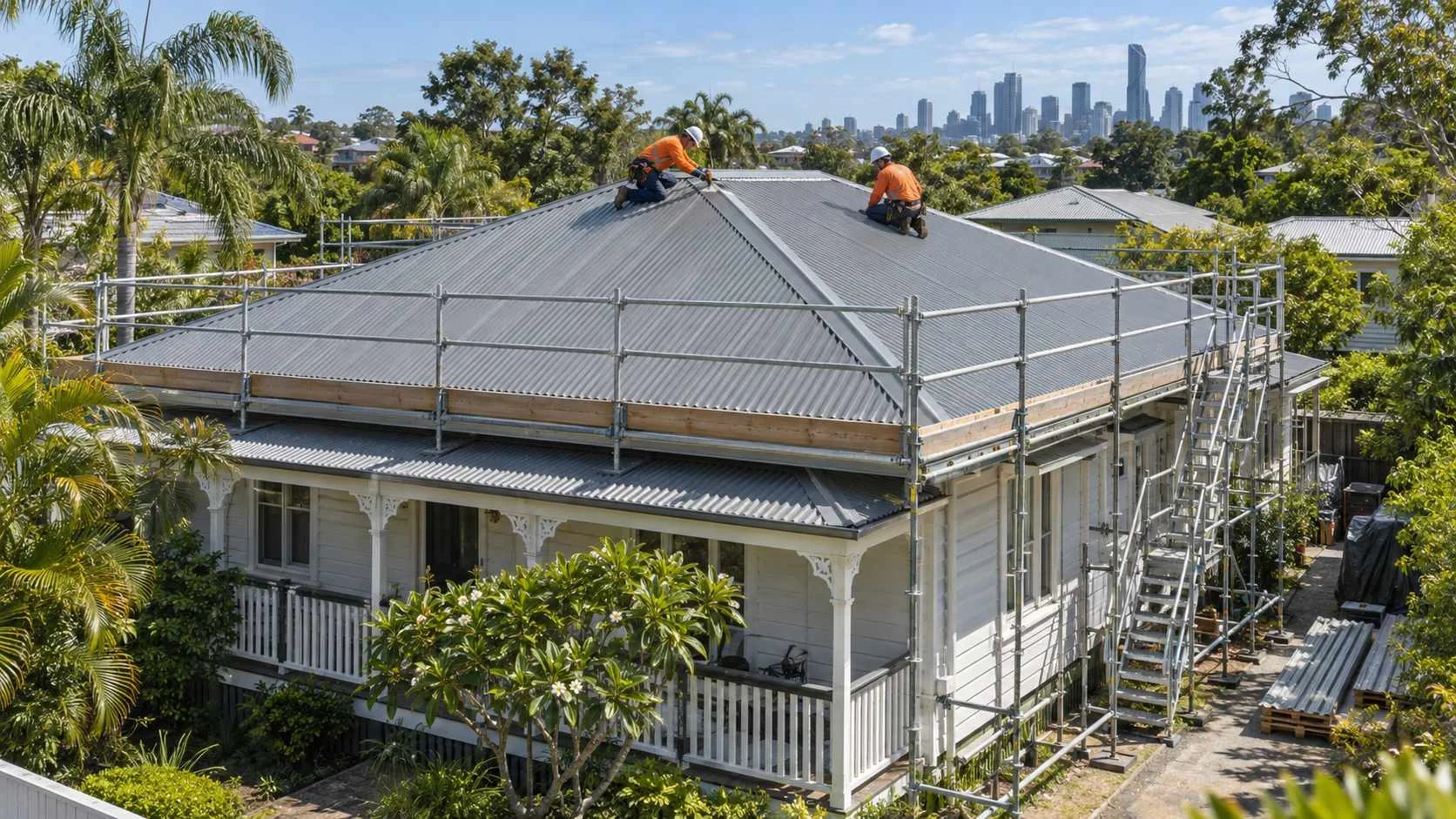
The team needs room for deliveries, materials and removal of the old roofing. Scaffolding or edge protection is arranged as required. Confirm which driveway, garden or access areas will be occupied and when equipment is expected to arrive.
2. Removal and checks beneath the covering
The existing roofing and agreed components are removed in a sequence suited to the property and conditions. This gives access to parts of the roof that could not be fully inspected beforehand. Damaged battens or timber may need attention before installation can continue.
If additional work is identified, its cost and effect on the schedule should be explained and documented. Keep an agreed contact person available so questions can be resolved promptly.
3. Preparation and new roofing
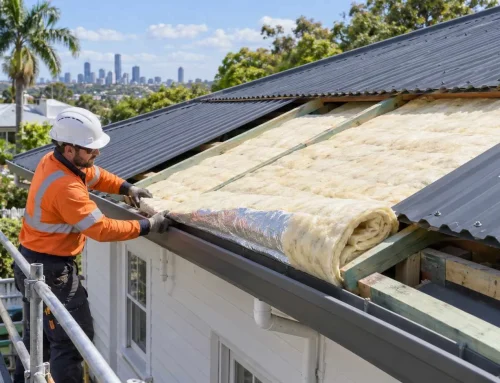
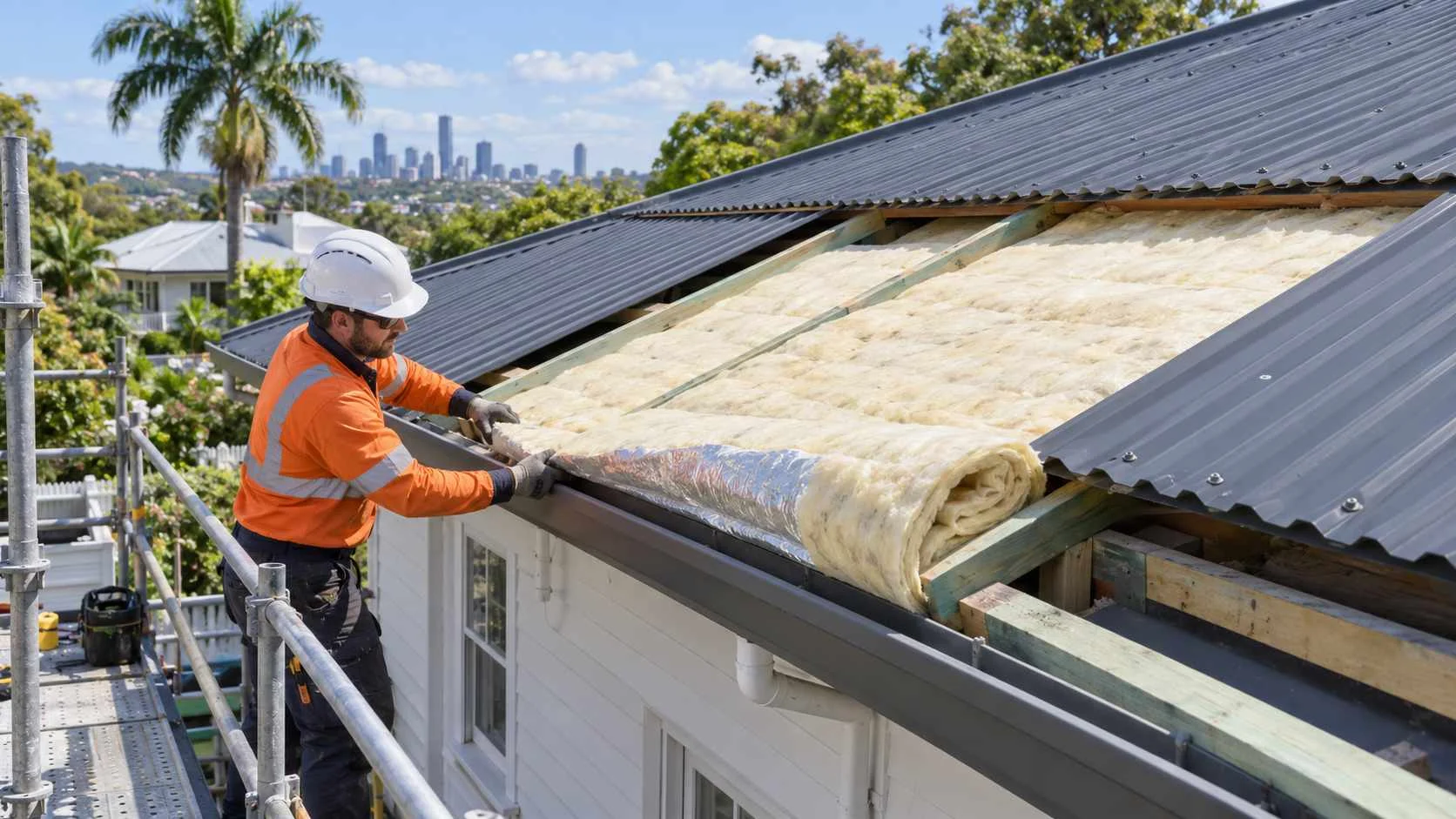
The specified preparation, battens and under-roof materials are completed before the new covering is fitted. Flashings, ridges, valleys and junctions around walls or roof penetrations need their own attention. These details form part of the job even when most of the new sheets or tiles are already in place.
4. Finishing and handover
The completed work is checked and the work area cleaned. Agreed accessories, solar reinstatement and equipment collection may involve separate visits. Confirm the expected handover date and whether any follow-up visits remain on the schedule.
Why some roof replacements take longer
Roof size, height and access
More roof area means more material to handle and install. A high-set home, a steep roof or a block with restricted access can also require a different setup from a low-set house with clear access. Roofs with several valleys and adjoining sections take more detailing.
Roofing materials and changes to the design
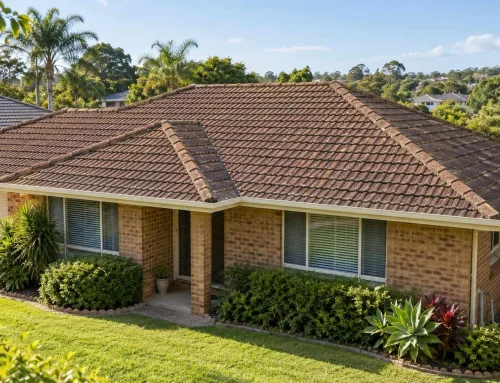
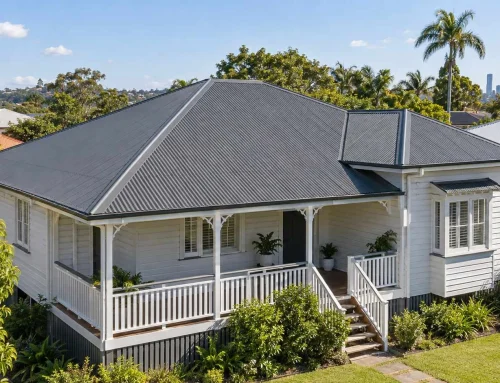
A metal roof replacement and a tile roof replacement involve different handling and installation methods. A tile-to-metal conversion may also require changes to battens and other supporting components.
Our Ascot unit block project included re-pitching the roof before installing a new KLIP-LOK® system. That extra preparation illustrates why a replacement involving design changes needs a schedule based on its own scope.
Asbestos removal and other trades
Asbestos roof replacement requires coordination between appropriately licensed removal professionals and the roofing team. The removal stage and required checks must be completed before the next stage can proceed.
Solar panels and roof-mounted equipment need planning too. Confirm who is arranging the appropriate trades and when removal and reinstatement will happen. A finished roof covering does not necessarily mean the solar system will be back in service that same day.
How does Brisbane weather affect the timeline?
Rain, wet surfaces and strong winds can affect when roofing work can proceed safely. Forecasts and site conditions influence the removal sequence, material handling and the protection needed while work is underway.
Before starting, ask how exposed areas will be protected, who will update you if the weather changes and how a delay affects the expected finish date. Build some flexibility into bookings for other trades that depend on the roofing being complete.
How to prepare your home for the work
- Confirm parking and access. Move vehicles before deliveries or equipment block the driveway.
- Clear the agreed work areas. Discuss outdoor furniture, pot plants and stored items with the roofer.
- Plan for noise. Removal and installation can interrupt calls, sleep and working from home.
- Arrange space for children and pets. Keep them clear of work and delivery areas.
- Check service interruptions. Ask whether solar, electrical or other roof-mounted equipment will be temporarily unavailable.
- Stay contactable. Agree how you will receive updates and make decisions if additional work is found.
If you are still deciding whether the roof needs replacing, read our guide to roof restoration versus replacement before organising the next stage.
Roof replacement timing FAQs
Can I stay at home during a roof replacement?
It may be possible, but confirm the arrangements before work starts. The scope, safe access, noise and any asbestos-removal requirements affect that decision. Discuss any need for temporary accommodation with the contractor and removal team where relevant.
Will work continue over the weekend?
Confirm the planned working days and site hours with your roofer. An estimate in working days can extend across weekends, weather delays or gaps between trades. Use the agreed calendar dates when arranging leave or other appointments.
How soon can NuRoof Brisbane start?
The start date depends on the assessed scope, product availability, bookings and any preparation required. Contact us with your property details so we can discuss the next steps and an expected timeframe.
Plan your Brisbane roof replacement
Tell NuRoof Brisbane about your existing roof, any leaks or damage, and the dates you are working around. We can arrange an assessment, explain suitable replacement options and discuss the expected schedule.
Business hours: Monday to Saturday, 8am–5pm.
Metal roofing and roof cladding: QBCC Licence 15314871.