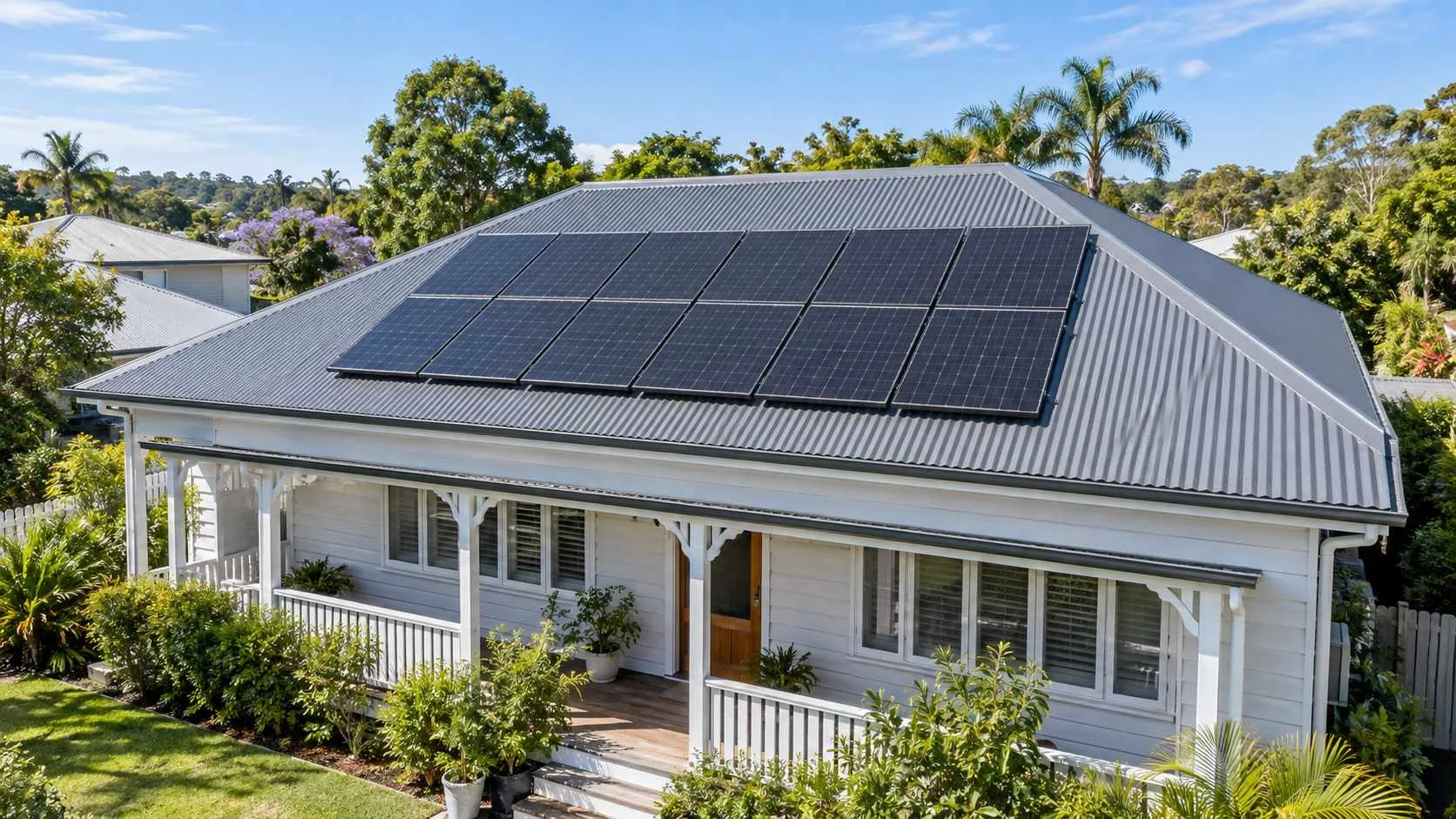
If you have solar panels and need a new roof, the two jobs need to be planned together. The roofer needs access beneath the panels, and the solar system needs to be handled correctly before it can go back into use.
Solar panels over the roof area being replaced usually need to be disconnected and removed, then reinstalled once the new roof is ready. Existing panels may be suitable to reuse after assessment. Electrical disconnection, reconnection and testing need to be carried out by an appropriately licensed electrician.
At NuRoof Brisbane, existing solar equipment is considered when planning the replacement scope. Confirm the removal and reinstatement arrangements while the quote is being prepared so each stage can be coordinated.
Why do the panels usually need to come off?
Panels and their mounting system can obstruct access to the roofing beneath them. For a complete replacement of that area, the team needs to remove the old covering, check accessible supporting components and install the new roofing and details.
The work may involve removing rails and brackets as well as panels. If only a separate section of the roof is being replaced, the solar installation may be unaffected. The roof layout and work area should be checked before deciding what must be moved.
Who should handle the solar work?
Arrange the electrical work through a licensed electrical contractor with experience in solar systems. The Queensland Electrical Safety Office states that solar maintenance involving electrical work must be performed by a licensed electrician. General handling and roofing work also need an agreed method and the appropriate people.
Ask for electrical licence details. You can also check any claimed solar installer accreditation through Solar Accreditation Australia's register.
Leave disconnection to the electrician. Switching off household power does not make the whole solar installation safe to handle: panels can still generate electricity in daylight. The Electrical Safety Office's solar electrical safety guide explains why this matters.
How removal and reinstallation fit around the roof replacement
1. Review the existing system
Share the system's age, panel and inverter details, warranty documents and any known faults with the solar contractor. A check before removal helps establish its condition and whether the proposed plan is to reuse, repair or upgrade the equipment.
2. Disconnect, remove and store the equipment
The electrician manages the electrical isolation and disconnection. Panels and any mounting components obstructing the roof work are then removed under the agreed arrangements. Confirm who handles transport, where the equipment will be stored and how it will be protected from damage while it is off the roof.
3. Replace the roof and prepare for the mounting system
The roofer completes the agreed removal, preparation and new roofing. Before solar mounting begins, the roofer and solar contractor should agree on the attachment method and any weatherproofing details required for the selected roofing system.
4. Reinstall, reconnect and test
Once the roof is ready, the agreed mounting system and panels can be installed. The electrician completes the electrical work and testing before returning the system to service. Ask for confirmation that it is operating and for the relevant test records, electrical certificate and updated system information for the work performed.
Can the same panels and brackets go back on?
A roof replacement does not automatically mean buying a new solar system. The solar contractor should assess the panels, inverter, cables and mounting equipment, then explain what is suitable to reuse and what needs attention. Ask which requirements apply to the proposed reinstatement before agreeing to the work.
Mounting compatibility needs particular attention when changing roof materials. For a tile-to-metal roof replacement, do not assume the old mounting arrangement can be transferred unchanged. A new metal roof may also have a different profile from the one being removed. Have the installer confirm the suitable components for the new roof.
If you are considering extra panels, a different inverter or a battery, request a separate upgrade proposal. That allows the design, compatibility and any necessary approvals to be considered before the roofing and solar work are booked.
How long will the solar be out of use?
Plan for an interruption to generation from the affected panels while they are disconnected and removed. The length depends on the roof work, weather, equipment availability and the solar contractor's return visit.
Agree on the removal date and expected reinstatement date before the job starts. Confirm who will update the solar contractor if roofing is delayed. Reinstallation and testing may happen on a different day from completion of the roof covering.
What should the quote include?
Solar removal and reinstatement should be clearly included or excluded in the roofing proposal. If a separate contractor is quoting, check that both scopes fit together. Look for these items:
| Before removal | System assessment, electrical work and arrangements for access. |
|---|---|
| Handling and storage | Panel removal, transport, storage location and responsibility for damage. |
| Mounting | Parts being reused or replaced, compatibility with the new roof and weatherproofing details. |
| Return visit | Reinstallation, reconnection, testing and the expected interruption to generation. |
| Price and records | Inclusions, exclusions, possible extra work, relevant certificates and warranty information. |
The price depends on the system size, access, equipment condition and work required. Our Brisbane roof replacement cost guide covers the wider roofing inclusions to check alongside the solar quote.
Keep the roofing and solar records together
Keep the agreed scope, condition photographs, test records and warranty documents. Confirm whom to contact about the roofing, mounting system and electrical installation after handover. Ask how removal and reinstallation affect any existing product or installation warranties.
If the project involves asbestos roof replacement, solar work must be coordinated with the asbestos-removal plan before anything attached to that roof is disturbed.
Solar panels and roof replacement FAQs
Will the whole house lose electricity?
Solar downtime does not automatically mean the house must be without power for the entire job. Ask the electrician which household power interruptions are required and when. Tell them about batteries and backup circuits so you understand which supplies will remain available.
Should I replace an ageing roof before installing new solar?
Have the roof assessed before booking a new solar installation. If replacement is needed, completing it first can avoid paying to remove and reinstall newly fitted panels. Our restoration or replacement guide explains what to consider when assessing the roof's condition.
Who organises the solar contractor?
Confirm this when accepting the quote. The arrangements should name who books each visit, who communicates changes and who is responsible for each part of the work. If you want to use your existing solar installer, raise that during the initial roof assessment.
Planning a new roof with solar already installed?
Tell NuRoof Brisbane about your roof and existing solar system. We can arrange a roof assessment, discuss replacement options and identify the solar coordination needed in your project scope.
Business hours: Monday to Saturday, 8am–5pm.
Metal roofing and roof cladding: QBCC Licence 15314871.