

BANYO · ROOF HISTORY, INSPECTION & RE-ROOFING
Roof Replacement Banyo
Roof replacement in Banyo is easier to plan when the roof’s history is understood. NuRoof helps homeowners work through recurring leaks, deteriorated materials and the joins between original roofs and later additions before settling on a complete re-roofing scope.
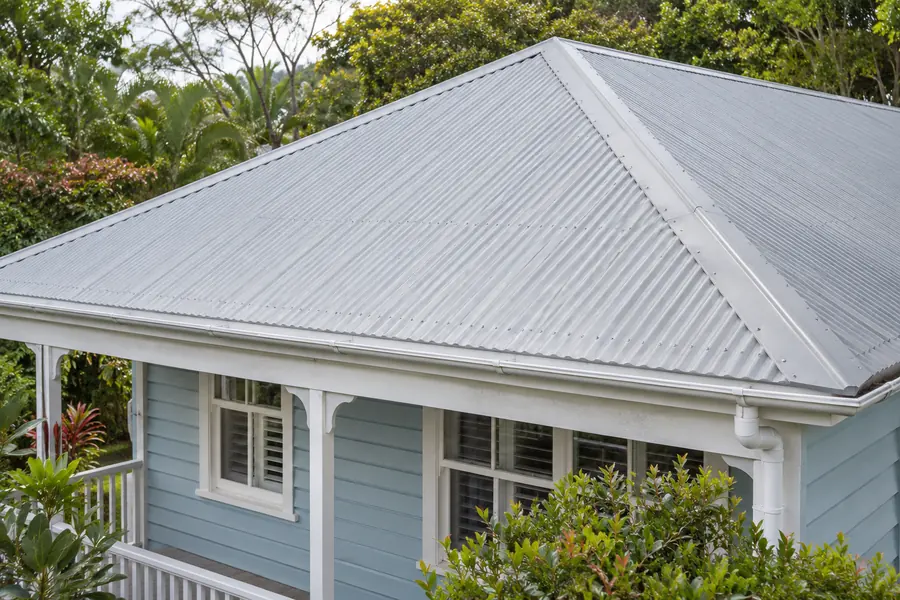
Silver-grey metal roofing on a pale-blue timber cottage.
Tell us what has changed over the years
In Banyo, separate houses accounted for 92.2% of occupied private dwellings in the 2021 Census. That broad picture does not tell us the age or condition of your roof. A useful roof replacement assessment starts with the individual building and its repair history.
A rear extension, enclosed veranda or old skylight can explain why water is appearing in a particular room. Gather any previous invoices, plans and dated photographs. Even a simple note saying “only leaks in wind-driven rain” helps describe the problem. It does not replace an inspection, but it gives roof replacement planning a better starting point.
NuRoof Brisbane · Metal roofing and roof cladding · QBCC 15314871 · 1300 431 900
What to gather before the assessment
A short leak timeline
Record the rooms affected, when the leak occurs and what previous work was done. Photographs of ceiling stains can be useful; there is no need to climb onto the roof.
The additions and roof junctions
Mention patios, garages and later additions, including areas that appear to use different materials. Roof replacement boundaries should be clear where these sections meet.
What you know about the covering
Share the approximate age and any material records. If the covering is uncertain, leave it undisturbed and ask how it will be identified before removal.
Match roof replacement to the condition found
Widespread metal-roof deterioration
Where deterioration extends across the covering, a metal roof replacement proposal should explain the areas affected and the new system recommended. Ask how old penetrations and flashings will be dealt with.
Tiles, older sheeting or mixed materials
A roof replacement involving different materials needs clear removal and installation scopes. Do not assume that changing the visible covering also includes every supporting component or adjoining roof section.
Older materials need identification, not guesswork
The suburb name, a photograph or the age of the house cannot confirm whether a material contains asbestos. Queensland’s asbestos guidance explains common locations and the need for proper identification. Do not cut, drill or collect a sample yourself.
If suspect material is present, roof replacement planning must establish the appropriate assessment and removal arrangements before work starts. Ask the quote to separate those requirements from the new roof installation. NuRoof’s asbestos roof replacement service information is a starting point for that conversation, not a diagnosis of your property.
Ask for a scope you can follow
- A list of roof areas being replaced, with retained areas identified.
- Removal and disposal arrangements appropriate to the confirmed materials.
- Details for junctions, flashings, skylights and other roof penetrations.
- An explanation of unknown conditions and the approval process for variations.
- Access, protection, cleanup, proposed products and handover information.
From roof history to a Banyo re-roofing plan
1. Explain what you have seen
Send the address and a short description of the problem. Include safe ground-level photos and useful records rather than trying to diagnose the roof yourself.
2. Review the findings
Ask why roof replacement is proposed, which areas it covers and which existing items will remain. Resolve gaps in writing before accepting the scope.
3. Prepare for the work
Agree on access, deliveries and household arrangements. Keep a contact available during roof replacement if newly exposed conditions need a decision.
